Freitag, 17. Dezember 2010

2010 Nissan Maxima SV Sport is a lot of car for a lot of coin

Posted by Hack Facebook Account On 09:58 No comments


2010 Nissan Maxima SV Sport – Click above for high-res image gallery

Front-wheel drive is a funny thing. When originally introduced during the Thirties in the Cord 810 (then later in the awesome supercharged 812) and the Citroën Traction Avant, FWD was hailed as a major breakthrough, a wondrous technological innovation that allowed for lower ride height and greatly increased passenger space. Postwar consumers got a taste of the wonders of FWD with the iconic Citroën DS. At the top of its game in the Sixties, General Motors reintroduced FWD to American consumers with two remarkable luxury coupes: the 1966 Oldsmobile Toronado and the 1967 Cadillac Eldorado. Come the Seventies, Citroën produced what is arguably the greatest GT coupe of that decade, the impeccable (and FWD) SM.


Roll the clock forward to the Eighties and suddenly everything was being tugged around by its front wheels. Honda, Toyota, Nissan, General Motors, Ford and Chrysler all jumped head first onto the FWD bandwagon and, for the most part, they haven't looked back. Granted, Cadillac has rethought which wheels get driven, but with the exception of a dinosaur livery-mobile, there isn't a single rear-wheel-drive Lincoln to be found. Even Volkswagen got in on the transversely-mounted engine madness. This left only the Germans – namely Mercedes-Benz and BMW – to seriously carry the rear-wheel drive passenger car torch for nearly a decade. Sure, Lexus and Infiniti brought out some heavy hitting RWD sedans along with a raft of FWD offerings (M30 I30, G20 anyone?), but Acura never bothered.

The average gearhead hates FWD for all the right reasons (weight distribution, steering feel, the front tires being asked to both propel and turn, etc.), and during a recent discussion we had with a half-in-the-bag PR guy, [NAME REDACTED] exclaimed, "Front-wheel drive sucks!" So, how can a technology go from the penthouse to the doghouse like that? One answer (of many) comes from the Minnesotan economist/social philosopher Thorstein Veblen and his book The Theory of the Leisure Class. Here's a quick, ten-cent Cliff Note version: When electric lighting first appeared, only the rich could afford electric lights. As such, electrically lit dinners were considered romantic and desirable. However, once electrification trickled down to the unwashed masses, only the rich could afford both bulbs and candles. Hence, candlelit dinners became en vogue. Which – believe it or not – leads us very nicely to the 2010 Nissan Maxima SV Sport and its $38,384 asking price.
Granted, you can get a new Maxima for less scratch. The base car starts at "just" $30,460. But the car Nissan provided us has a price tag of nearly $40,000. You do get a lot car for that money, but at the end of the day, $38,384 is a big chunk o' change. So big, in fact, that you might be tempted to choose an Infiniti G37 sedan (beginning at just over $33,000), or even a Cadillac CTS (starts at $37,000). Two similarly-sized cars that are, as it happens, rear-wheel drive.

The Maxima's shape is one thing it has going for it. When the third-gen Altima was introduced in 2002, suddenly the once lofty Maxima looked an awful lot like its lower-priced platform mate. Then the Altima was redesigned and placed on Nissan's new D platform in 2007 and it still resembled the more pricey (and very long-in-the-tooth) Maxima. Finally, last year, Nissan brought us an all-new Maxima that didn't resemble anything.


A quick poll of the Autoblog staff reveals that almost all of us like the shape. From the blunted front end to the deeply sculpted sides to the fat, sexy haunches, there is little question that design-wise Nissan's biggest sedan has got the look. Though admittedly strange at first, the harpoon/fish hook head and tail lamps look sharp (no pun, no pun), especially when set off against a dark color. And these are some of the finest looking wheels we've seen on any car, let alone a big FWD sedan.

The interior's nearly as good as the exterior. First and foremost is that thick (we're talking BMW-thick) leather-wrapped steering wheel that is mercifully (nearly) free of button clutter. While all Maximas now ship with a Continuously Variable Transmission (CVT), the large, almost oversized aluminum flappy paddles behind the wheel feel great. The seats are also thick, many-way adjustable and comfy. Though we'd like some more leg and hip bolstering – the seat bottom is a little flat – rear seat customers will enjoy their spacious perch. The instrument binnacle is intelligently designed and filled with big, legible gauges, exactly what one would need if you were to take Nissan up on its renewed 4DSC (Four-Door Sports Car) boast.


Many of us are also fans of the very Infiniti-like nav-cluster. Overall, the quality of the materials is on par with other entry-level luxury offerings with one big exception: The area surrounding the gear selector is not only dull, but almost undesigned. And if the car's got a CVT (i.e. no set speeds), why not follow BMW's lead and move the gear lever to the column so as to free up some space? A minor quibble, maybe, but that area was beneath (again with the no pun) the rest of the rather pleasingly pleasant interior.


One justification for the Maxima's pricey sticker is that lump of VQ goodness found under the hood. Heaping praise upon Nissan's wonderful V6 is like calling firefighters heroes – you just do it, and only the crazy will argue. Still displacing 3.5-liters – unlike the Z, G, M and FX, which have jumped up to 3.7-liters – the VQ35DE produces a whopping 290 horsepower and a stout 261 pound-feet of torque, more than enough to scoot the fairly big boy (190 inches, 3,565 pounds) to 60 mph in less than six seconds. In terms of potency, those 290 horsies are more than you get from 3.5-liter V6s found in the Accord (271 hp), Avalon (268 hp), Taurus (263 hp) or Mercedes-Benz E350 (268 hp). And way more than you get in a 211 hp turbocharged Audi A4. But none offer a CVT... (Note: FWD Audi A4s have a CVT)

Allow us to state up front that when CVTs first arrived on the scene they were nasty, despicable things that were constantly whirring, wheezing and searching for who knows what every time you buried your right foot. Much like automatic transmissions – only worse. That rant out of the way, the second generation of CVTs are actually... okay.


The first good one we experienced was in the cyber barge Lexus LS600hL, though we chalked up that transmission's okay-ness to the fact that Lexus had buried the shiftus interruptus beneath the brand's requisite nine tons of sound deadening. Besides, in a $120,000 automobile, the CVT had better be good. Then we got our paws on some down market CVTs – principally in Nissans like the Rogue, Versa and Cube. And you know what? Most of us like 'em just fine. They weren't Lexus wonderful, but they were a fifth the price.

In the Maxima, the CVT experience is better than in its smaller siblings, and about on par with the big, electric Lexus. In fact, for the first 20 minutes we were behind the wheel, we were unaware (fine – we forgot) that the car didn't have a regular old slush box. As our normal testing procedure begins with jamming up the curvaceous 110 freeway to Pasadena to fetch Drew Phillips and his photographic chops, we threw the tranny into manual mode and used the paddle shifters. That's right, the Maxima (like the LS600hL) has six faker-gear ratios (though the Lexus has eight) that allow it to behave just like an automated manual. It was only on suburban streets back in regular mode that we noticed the tach needle slowly rising and falling, as opposed to a regular automatic where the needle falls precipitously with each gear change.


So, how's the Maxima drive? Well, it's very quick. Stomp the gas and this sucker just goes for it. However, due to so much power spinning the front wheels, you are very aware that you are being pulled to extra-legal speeds, instead of pushed. To be fair, this has been a Maxima trait since they first started dropping VQs into the sedan. But in the 2010 Maxima, you really do notice all 290 ponies. The sensation is like holding onto a horse's reins. And torque-steer – the engine's tendency to try and rip the wheel from your hands when you throttle out of a corner – is an all day event.

While there's nothing inherently rotten about FWD, there is something unsettling about big horsepowered FWD cars – unless they've got a fancy way of fighting back against all that power, like in the power-chopping Mazdaspeed3 (fuel gets cut early in low gears at high RPM) or the unequal-tracked Citroen DS/SM (where the front wheels extend out further than the rear ones). With the Maxima, you're just left to arm wrestle the mighty motor. We hope you've been eating your Wheaties.


When you're not shredding apexes, the Maxima is a fairly cool customer. The ride is plush and plenty comfy, while the cabin is quiet and nicely shielded from wind and motor noise. Those big, beautiful wheels do make some racket, though. Nothing fatal, but you hear 'em. Should you choose to saunter through corners (instead of play Lewis Hamilton), the well-engineered chassis can carry plenty of speed around the bends. Just watch your right foot.

Far from a four-door sports car (sorry, Nissan), the Maxima SV Sport is a roomy, nearly-luxurious, semi-athletic steed. If we woke up tomorrow and (somehow) discovered we owned a copy, we'd be happy. But would we pay $38,000 for one? Short answer: No. There's nothing really wrong with the car, save for its sticker. Who then would consider a Maxima spec'd out like our test vehicle? Best we can figure, an Accord owner who is quite happy with his/her car but just wants something a little nicer, a little quicker and a whole lot more good looking. Then again, they might not. For our money, we'd take an Infiniti G37 sedan with the six-speed manual and pocket the extra $2,000. It's not that RWD is always better than FWD. But in this case, it is.
source by autoblog.com

Aston Martin DB9

Posted by Hack Facebook Account On 05:13 No comments

The Aston Martin DB9 coupe is a four seats (2 +2), constructed with lightweight materials (aluminum predominates) and a twelve-cylinder engine in 'V' and 456 hp.

Aston Martin DB9
Aston Martin DB9

The Aston Martin DB9 is available with manual or automatic and has a convertible version, called the Aston Martin DB9 Volante. The Aston Martin DB9 with manual shift costs € 172,062, the Aston Martin DB9 Volante, € 187,870. The change has an automatic surcharge of € 4608.

Aston Martin DB9
Aston Martin DB9

On the exterior design corners have been avoided and that various elements protruding from the body. Despite this, the value of the aerodynamic coefficient is not good: 0.35. A Porsche 911 is 0.28, a Bentley Continental GT 0.32 and a Lamborghini Murcielago 0.33; as Aston Martin DB9 have not sought a low rate but a high stability at high speed.

Aston Martin DB9
Aston Martin DB9

The doors are open normally, but tilting towards the top 12. The foreign hands are illuminated by LEDs also use these LEDs in the pilots.

2005 Aston Martin DB9
Aston Martin DB9

Bring tires 19 "and the Bridgestone tires are about 50 REO, specific to this model (235/40 ZR19 front and 275/35 ZR19 rear). Brake discs are ventilated and striated. It has ABS, electronic distributor and brake assistant, Stability control, front and side airbags and seatbelt pretensioners on.

2005 Aston Martin DB9
Aston Martin DB9

The Aston Martin DB9 engine is in a twelve-cylinder 'V' for the 60th. Da 456 hp at 6,000 rpm and 570 Nm of torque at 5,000 rpm. It is based on carrying the Vanquish but changes the crankshaft, the intake and exhaust manifolds, the lubrication system and the electronic management.

Aston Martin DB9

The cylinder head, 48-valve, was developed jointly by Aston Martin DB9 and the department of development and technology of Ford. You can lead a gearbox 'Graziano' manual or a "ZF" automatic, two of six relationships. With this engine, the Aston Martin DB9 reaches 300 km / h and accelerates from 0 to 100 km / h in 4.9 s (5.1 s automatic).

Aston Martin DB9

For the shooters inside the doors, dashboard, instrument panel and some indicators of it has been used aluminum. The wood has been used in only two places: the top of the console, and if the purchaser so wishes, at the top of the door panel. There are twenty different colors of leather upholstery for the interior.

Aston Martin DB9

The counter has the peculiarity that rotates in the opposite direction-clockwise, as in the Atom and the DB2. There are no red zone but a light that turns on to warn that it has reached the limits of the regime. The moment that turns depends on the ambient temperature, the time it takes the engine running and the mileage of it.

Aston Martin DB9

In the box there is a screen-type "OEL (organic electroluminescent display), the Aston Martin DB9 is today the only production model in a series that takes. Regarding LCD has a higher resolution, contrast and viewing angle.

Aston Martin DB9

There is no gear in the automatic version. On the dashboard, there are four buttons to select the operating mode (P, R, N, D) and magnesium cam behind the wheel to change the relationship. Among the four buttons change is the start of the engine, which is transparent glass. When pressed lights red, and then turn blue.

Aston Martin DB9

The sound equipment ("Linn Hi Fi system) has 10 speakers (950 W) and a bass (200 W) that incorporates an accelerometer to compensate for changes in pressure in the internal wiring of fiber optics.

Aston Martin DB9

It has the aluminum chassis, with pieces made by process of casting, extrusion or stamping; the bonnet, roof and rear wings are also of this material. The front wings and boot lid are of a compound.

Aston Martin DB9

The suspension is independent of deformable parallelogram with a double triangle. Both the front and rear are mounted on a subchassis; the rear also supports the gearbox and differential. The two subchassis and the body of the pads are made of aluminum. The Aston Martin DB9 weighs 1785 kilograms (version with manual shift), the same as a BMW M6, a Bentley Continental GT weighs 600 kg more (2,385 kg).

Aston Martin DB9

The pieces of the chassis and body panels are joined to each other through an adhesive. To join the float back is used an ultrasound system that vibrate (with a frequency of 20,000 Hz) molecules of the two pieces of aluminum to merge, creating a link between the two pieces. Such a union is 90 percent stronger than a spot welding.

Aston Martin DB9

To achieve an optimal weight distribution (50:50) and to lighten up the set have been used other lightweight materials, including magnesium (in the interior structure of the doors and column of the address) or carbon fiber for the transmission shaft connecting the engine (located at the front) with the gearbox (placed ago).

Aston Martin DB9

Ferrari 599 GTB Fiorano

Posted by Hack Facebook Account On 05:07 No comments

The new Ferrari 599 GTB Fiorano brings the content most innovative and technologically advanced applied by the house of the Cavallino. The Ferrari 599 GTB Fiorano has 620 hp power to 7600 rpm.


Ferrari 599 GTB Fiorano

The birth of the new car was announced at the Detroit Motor Show by Ing. Amedeo Felisa, Vice General Manager of Ferrari Spa.


Ferrari 599 GTB Fiorano

This new model brings the content most innovative and technologically advanced applied by Ferrari to a 2-seat car powered front-central, in fact represents the new milestone in terms of sportiness, emotion and drive design.


Ferrari 599 GTB Fiorano

The Ferrari 599 GTB Fiorano is characterized by performance, which put it at the top of the class: the V12 propeller of 5999 cm3 is derived directly from the supercar "Enzo Ferrari" and is capable of providing a power of 620 hp at 7600 rpm.


Ferrari 599 GTB Fiorano

The chassis and body are entirely in aluminum and is the latest evolution of Ferrari's experience in this technology.

Ferrari 599 GTB Fiorano Interior


Ferrari 599 GTB Fiorano

Thanks Pininfarina design, the Ferrari 599 GTB Fiorano is characterized by an aggressive and elegant style, which blends in perfectly with a careful aerodynamic study is necessary to achieve absolute performance excellence.

Ferrari 599 GTB Fiorano Engine


Ferrari 599 GTB Fiorano

The new car replaces the 575M Maranello that, along with the 550 Maranello made in 1996, reached the 5700 units produced, a record in their segment for Cavallino rampant.

Ferrari 599 GTB Fiorano

The Berlinetta 2 posts 12-cylinder model is the symbol of Ferrari production, from the famous 250 GT to 275 GTB and 365 GTB4 until the 575M Maranello said.

Ferrari 599 GTB Fiorano

The Ferrari 599 GTB Fiorano was officially presented on February 28 2006 in Geneva, at the motor show.

Donnerstag, 16. Dezember 2010

Lamborghini Estoque

Posted by Hack Facebook Account On 06:14 No comments

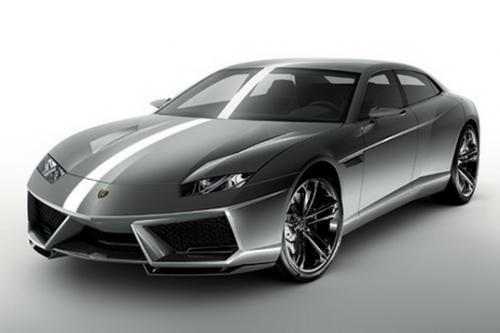
The first Lamborghini sedan: Lamborghini Estoque Concept. is a Supersport four-door that features hitherto unknown to the cars of the house of Taurus, while safeguarding the values unmistakable: to be extreme, uncompromising and unmistakably Italian.

Lamborghini Estoque
Lamborghini Estoque

At the same time enriching the DNA of the brand with a versatility totally new offering four posts and a capacious trunk, this sport is suitable for everyday and goes perfectly with a multifaceted lifestyle.

Lamborghini Estoque
Lamborghini Estoque

Despite being a prototype with high conceptual content, a show car built specially for the Paris Exhibition of 2008, already at first sight Estoque leaves no room for doubt: it's a real Lamborghini, a car from the unique style and unmistakable. The step along the road large, the large wheels with a low silhouette by strong aesthetic content express the creativity typical of the style Lamborghini.

2008 Lamborghini Estoque
Lamborghini Estoque

Besides revealing a totally new interpretation of essence of style Casa Del Toro, the Lamborghini Estoque is a concept car that shows clearly the way forward. This applies to the new elegance expressed stylistic originality of language, and is especially for the very concept of car it represents.

Lamborghini Estoque
Lamborghini Estoque

Undoubtedly, the Lamborghini Estoque is the first sedan in the history of the House of Sant Agata Bolognese. In this regard, however, the term "saloon" would be correct only to indicate the number of doors.

Lamborghini Estoque

The Lamborghini Estoque exposed at the Paris Motor Show gives evidence of the strength of innovation, creativity and skill of stylistic Automobiles Lamborghini. Currently the House of Sant Agata Bolognese is collecting a huge market success with the Gallardo and Murcielago models for 2008 and expects to achieve the eighth record year of consecutive sales.

Lamborghini Estoque

The show car Lamborghini Estoque is one of several possibilities of setting up a third range of models in the house. In this regard, however, has not yet taken any concrete decision, either as regards the production of a third range or on the concept Lamborghini Estoque.

Lamborghini Estoque

From real Lamborghini, the Lamborghini Estoque course, leads a strong name derived from the world of Spanish bullfighting, "Estoque" means in fact the sword, about 90 cm long, that the matador uses in combat with the bull.

Lamborghini Estoque

Conceptually the Lamborghini Estoque expresses the idea of a Lamborghini that while Supersport is a high Caratage and a coach of great usability. From 4-door sedan, equipped with 4 individual sports seats, is suitable for many needs and situations of travel.

Lamborghini Estoque

The current models of Casa del Toro give continuity to the best tradition of the mark and the Italian automobile design of the 60 and 70, with perfect proportions and lines austere, rational, elegant and devoid of ornament.

Lamborghini Estoque

With the Lamborghini Estoque you travel so perfect for travel to a working meeting at the theater, the golf course or for a weekend with its family. It is also the only car that allows you to share with more than one person the extraordinary pleasure of traveling on board a Lamborghini.

Lamborghini Estoque

Despite its very Filante silhouette, with an overall height of only 1.35 m, Lamborghini Estoque is surprisingly spacious. The secret lies in the very long, allowing a comfortable sitting and sports, despite the position of the engine considerably behind front-Central. In addition, the large doors from the opening and allow access particularly comfortable.

Lamborghini Estoque

At the same time the Lamborghini Estoque sports car is a pure-bred, which offers high performance, precision driving and a high turbot exciting. E 'pleasant in all driving conditions, both on a mixed, narrow stretch of a mountain road is long distances on motorways. With its versatility of use, Estoque complete so the ideal range of Supersport to Lamborghini.

Lamborghini Estoque

Every Lamborghini should be recognizable at first glance like a masterpiece of design, unique and unmistakable. In this regard, the Lamborghini Estoque ago draws a single conclusion: "mission accomplished" - mission accomplished.

Lamborghini Estoque

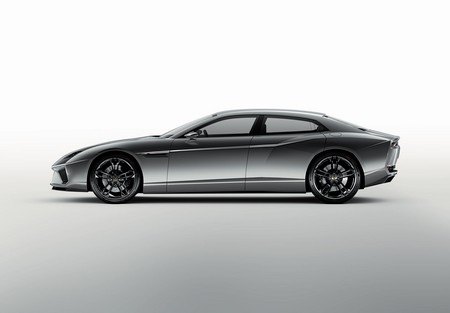
Its proportions are just fascinating. No other car in a bride so convincing elegance line with the characteristics of sportsmanship that the car makes its height and width reduced impressive. In figures: the new showcar painted in dark gray measure 5.15 m in length, 1.99 m in width and just 1.35 m in height. The passage of the wheels of 3,01 m contributes to the elegance of the forms of the car.

Lamborghini Estoque

The bonnet front plate, the pitch along the narrow side windows and sloping tail that ends with a cut express negative because the typical style of coach of the Italian school, but interpreted in a modern way. The front of the Lamborghini Estoque is characterized by a marked arrow angle and two bulky air inlets facing forward, interconnected by a small front spoiler, which bring in clear evidence of the sports car and its belonging to the family of supercar the Lamborghini.

Lamborghini Estoque

The architecture delivered by sports car was produced by providing the engine-central front in a very backward. Result: despite the very flat configuration of the front hood, the Lamborghini Estoque is perfectly in line with all safety and protection of pedestrians. The front hood of the Lamborghini Estoque highlights the position of the engine due to the presence of two huge holes out air and with the strong camber in the middle. Further air extractors are located in the front fenders, behind its wheel.

Lamborghini Estoque

Even the front wheels from 22 inches in the new five-spoke design doubles contribute to highlight the power that the car forward with the permanent wheel drive.

Lamborghini Estoque

The proportions ensure a presence at the impressive Lamborghini Estoque, whose wise definition of lateral lines gives a tremendously athletic aspect to the body. The flow of force from the engine that moves the bulky rear wheels of 23 inches is highlighted by a sturdy belt line below the line of crystals and a further bottom-line slightly toward the rear and the shaping of the pillars marked guards.

Lamborghini Estoque

The extraordinary dynamic connotation of the side is completed by the shape rear culminating with a pronounced trend 'negative' down and that adds tension to the whole of the car, making it appear in motion even when it stops.

Lamborghini Estoque

All these lines clearly defined concave enclosing spaces and spaces convex wisely proportionate and precise, giving the Lamborghini Estoque a strong personality style designed by Centro Stile Lamborghini.

Lamborghini Estoque

The formal logic of the car has completed the configuration Filante and very wide at the back. The width of the tail is also accentuated by the graphics horizontal rear LED lighting and the massive air vent covered by a grid. The elegant the rear is highlighted by finishing with a thin metal frame with chamfered edges slightly.

Lamborghini Estoque

The stylistic consistency of language is confirmed by several other finishing details, such as the presence on both sides of the car stop hexagonal fuel tank. The small tricolor flag on the front fenders, finally, highlights so refined that the country of origin of a car so original design can be only one: Italy.

Lamborghini Estoque

The great length of the passenger provides a very comfortable sitting on the four individual seats and important measure in determining the high comfort that this sedan has Supersport in long journeys. The stylistic features of the exterior aesthetic language are covered with appropriate adjustments in the car, for example in internal paneling of the doors and dashboard, designed with an angle of the arrow similar to that of the front.

Lamborghini Estoque

The material that dominates inside the skin is made of soft leather of highest quality. The four individual seats are fitted with a clear anatomical shape, offering an excellent comfort on trips long and numerous possibilities for adjusting electricity.

Lamborghini Estoque

The information concerning the operational status of the vehicle and walking appear to the driver on a large screen LCD. Depending on individual preferences you can set different modes of information display, for example by means of circulars or by conventional digital representation. The equipment inside is complemented by a sound system of high quality and an exclusive Rear Seat Entertainment System for rear passengers.

Lamborghini Estoque

As the cockpit, the luggage compartment of the Lamborghini Estoque is particularly spacious and can easily accommodate different golf bags or luggage.

Lamborghini Estoque

As a show car, the Lamborghini Estoque represents a proposed design based on a technical approach feasible with a number of interesting alternatives to the bodywork and mechanics.

Lamborghini Estoque

Like the models currently in production, the Lamborghini Estoque is equipped with permanent wheel drive, which divides the driving force of the engine always on the four wheels of the vehicle and in this way ensures excellent traction properties in any condition running, providing significant margins in sports riding very driven, and in case of difficult weather conditions. As dynamic variations and many parks in consumption could have a V8 paired with a hybrid form or a performance turbo direct injection.

Mittwoch, 15. Dezember 2010

Lexus IS-F

Posted by Hack Facebook Account On 06:15 No comments

The Lexus IS series sport gets growth. On the 100th "North American International Auto Show (NAIAS) in Detroit presented the new Lexus IS-F." F "adorns the future particularly athletic and powerful Lexus models of existing series.

2008 Lexus IS-F

2008 Lexus IS-F
Lexus IS-F

The Lexus IS-F has a five-liter V8 engine with more than 450 horsepower and an eight-stage automatic. With the introduction of the "F" label Lexus expanded its model to offer extremely high performance sports variants. The Lexus IS-F is the beginning of 2008 in Europe over the trade.

2008 Lexus IS-F
Lexus IS-F

The sprint from 0 to 100 km / h so far athletic Lexus in less than five seconds. The power transfer to the rear axle is the first time in this vehicle class on an eight-stage automatic transmission. The newly-developed torque converter allows extremely fast switching times.

2008 Lexus IS-F
Lexus IS-F

In manual switching by high-wheel paddle gearbox needs only a tenth of a second for the course change. To engine and transmission speeds perfect match, the Lexus IS-F for manual throttle valve down automatically.

2008 Lexus IS-F
Lexus IS-F

The first Lexus, the Lexus IS-F on an adjustable two-tiered, integrated vehicle dynamics management VDIM, the maximum driving fun and a very agile driving behavior guaranteed.

2008 Lexus IS-F
Lexus IS-F

For sporting handling bears for the new Lexus IS-F coordinated, deeply located chassis with 19-inch wheels significantly.

2008 Lexus IS-F
Lexus IS-F

Larger air intakes visually demonstrate the performance potential of the Lexus IS-F. A subtle rear spoiler increases the aerodynamic efficiency.

2008 Lexus IS-F
Lexus IS-F

The interior consists of athletic entitlement. Aluminum panels and special surfaces create a sporting atmosphere, specially shaped sports seats provide comfortable and safe maintenance even at high lateral acceleration.

2008 Lexus IS-F
Lexus IS-F

The wheel hub adorns an "F" logo. Compared with the normal, the IS-IS F includes an oil temperature display.

Dienstag, 14. Dezember 2010

Ferrari F430 Spider

Posted by Hack Facebook Account On 05:06 No comments

World premiere of the new Ferrari F430 Spider took place in Geneva in the summer 2005. The new generation of 8-cylinder Ferrari's F430 is enriched Spider.

2005 Ferrari F430 Spider
Ferrari F430 Spider

Among the important innovations on this new Ferrari 'open', are the electronic differential control, developed by Ferrari for F1 race car, able to fully exploit the torque of the engine to maximize the values of traction and control on the steering wheel, called "manettino" from the pilots Squadra, which allows you to act quickly on the various systems that govern the dynamics of the vehicle, occur without any lowering of the level of attention by the driver.

2005 Ferrari F430 Spider
Ferrari F430 Spider

Formula 1 and it is confirmed to be the lab's advanced research also open to cars, the Ferrari F430 Spider, designed by Pininfarina, uses the latest aerodynamic calculation methodology developed in collaboration with Manage S. House of Maranello.

2005 Ferrari F430 Spider
Ferrari F430 Spider

The new design concrete sought the aerodynamic work and integrated into the bonnet, the new design more muscular engine of air taken from extractor and less generous size, derived from competitions. The large glass rear allows viewing of the propeller.

2005 Ferrari F430 Spider
Ferrari F430 Spider

The Ferrari F430 Spider in the electrical system of opening and closing of the roof is fully automatic, and the folding of the hood, a complete disappearance, is in extremely small spaces, such as to preserve the uniqueness of the engine on sight, while a spider into the rear engine -Central.

Ferrari F430 Spider Interior

2005 Ferrari F430 Spider
Ferrari F430 Spider

The new front is characterized by two air inlets of elliptical shape that fuel large radiators called to dispose of the high power of the engine. The shape is inspired by the competition of vintage Ferrari 1961, world champions in F1 with Phil Hill. At the bottom of the air inlets are united by a wing that directs the flow toward the bottom plate.

Ferrari F430 Spider

The engine is the new 90 ° V8 with a displacement of 4308 cm3 and 490 hp, compact and lightweight, able to achieve a specific power of 114 hp per liter and give the new Ferrari spider a weight / power 2.9 Kg / Hp dry. The benefits are of absolute excellence: acceleration from zero to 100 km / h in 4.1 seconds and top speed exceeding 310 km / h.

Ferrari F430 Spider

The Ferrari F430 Spider was officially presented at the Motor show in Geneva from 3-13 March 2005.

Montag, 13. Dezember 2010

Drunk on the power output? Bugatti Galibier concept runs on ethanol

Posted by Hack Facebook Account On 05:11 No comments


Bugatti Galibier concept - Click above for high-res image gallery

After months of speculation, Bugatti has finally pulled the wraps off its new four-door supercar concept just ahead of the Frankfurt Motor Show at an event for past customers and Bugatti-intenders. Up to this point, we've been referring to the French über-sedan as the Bordeaux, but it seems the actual car's moniker will be Galibier – the name of a difficult Alpine pass along the Tour de France.

Powering the Galibier concept will be a version of Bugatti's ridiculously powerful eight-liter W16 powerplant. Unlike the mill propelling the Veyron to ludicrous speed, this version is mounted up front and is capable of running on ethanol fuel, which may or may not allow the automaker to squeeze a few more ponies out of the engine... not that it needs it, of course. Plus, when swilling as much alcohol as the Galibier would be likely to ingest, it's hard to think of a car like this as eco-friendly.

One of the Galibier's most striking features is undoubtedly its two-tone outer shell, which is comprised of both polished aluminum for the doors and front fenders and a unique dark blue carbon fiber weave that shines through when illuminated. We also note a prominent center spine that recalls past Bugattis like the Type 35 and the classically beautiful Type 57.

Current reports peg the Galibier's top speed at 217 miles per hour (350 kilometers per hour), which, while slower than the Veyron's epic terminal velocity, is certainly nothing to sneeze at. Check out our gallery of high-res images below.


Sonntag, 12. Dezember 2010

2010 Nissan Versa lives life large

Posted by Hack Facebook Account On 11:27 No comments


2010 Nissan Versa SL – Click above for high-res image gallery

Small, affordable cars are like mushrooms. They quietly go about their business in the soggy bottom of the market, tolerated more than celebrated. Occasionally, the fungi mutates into a truffle, and so it is with this less-respected branch of autodom.


The Nissan Versa is no market newcomer. Introduced in 2007, it's trudged along unloved in the U.S. while faring better in markets outside the States as the Tiida. As with cuisine, some regional flavors are an acquired taste. The Versa hatchback has a decidedly "big in Europe" thing going on, with its distinctive shape and tall-hatch proportions. Taking into consideration Nissan's close relationship with Renault, the styling even seems Gallically influenced. We nabbed a pair of Versas, an S with six-speed manual and an SL with CVT, to see if Nissan's efforts are fetid or delicious. Make the jump to find out.
 Styling is one of the main weapons automakers have when prices are low. The Versa five-door comes off a little bubble-ish with its high-arching roof, but it's a boon to occupants. There's a squared-off C-pillar in back that doesn't consume visibility, and its reverse-cut suggests some Renault influence, as does the nose. New up front for 2010 is a redesigned grille, set between lamps that continue the European-influenced theme.

There will inevitably be detractors, but the Versa isn't styled for shock value. It's not so much pretty as it avoids the overt weirdness that can creep in when prices are low and hardware is pedestrian. Even in the flashy Metallic Blue that our SL tester wore, the Versa is relatively nondescript; the latest in a line of inoffensively styled Japanese hatchy things. Blending in isn't necessarily bad, and if you want more expressiveness, Nissan offers the Cube on the same underpinnings.


The interior follows the same design ethos of not rocking the boat. No element is overwrought on the cleanly-styled dashboard. The expanse of nothing that faces the front seat passenger cries out for a little something, though. At least it makes it easy to peg the quality of interior plastics and fit and finish, which is pleasing to the eye, if not the touch. All cars in this price range carry similar looks-decent-feels-nasty interior materials, and knocking the Versa for such would be unfair. While it's not an Infiniti-grade interior, the colors and materials come off as well-chosen. The dashboard and door pulls give an anti-style message, but they don't feel unfinished. The charcoal cloth upholstery and tan tweed headliner feel more luxurious than you would expect, and the whole interior milieu somehow evokes Golfs of the past.

The Versa's upwardly-bowed roof keeps the headliner off hairdos and also adds to an airy atmosphere inside. There's storage cubbies aplenty, and the ergonomics are a delight. The radio sits high in the dashboard, right at hand. Nissan offers a bargain-priced navigation unit in the Versa, a surprisingly high-end touch in a car that's in the $15,000 range. The Suzuki SX-4 offers standard navigation, but the Versa's integrated option is a slicker implementation.


Three big knobs for the HVAC are simplicity itself, and they back up their easy use with a tight, non-sloppy feel. It may seem a small thing, but controls without slack add to a feeling of build quality, and the Versa's HVAC controls feel better than those in some luxury vehicles we've tried. High-G cornering will send your beverages flying from the shallow cupholders, though the door cubbies accommodate bottled drinks.

Ergonomic complaints are few, indicating that the Versa's interior is a solid effort, overall. Some gripes include the steering wheel cruise control buttons, which could use identifying dots to lessen the need to look down while underway, and It would be nice to have some padding under your elbows, especially on longer drives. The gauges, however, are clearly seen through the steering wheel and the seats are a comfortable surprise. Plastics are hard to the touch, for sure, but there's not a cheap sheen on surfaces.

The base Versa comes equipped with a 1.6-liter four-cylinder that hums out 107 horsepower. Both Versas we tried had the up-sized 1.8-liter, 122-horsepower engine. From the gutless performance of the larger engine, we can only surmise that the 1.6 is an engine for drivers accustomed to planning every move. It could be that we're used to explosive horsepower, but even with its short gearing, the Versa feels light on torque. Fortunately the engine doesn't mind revving, and it's just boomy, not rough.


Surprisingly, the 1.8-liter engine is better when teamed with Nissan's XTronic CVT instead of the six-speed manual transmission. Unfortunately, the XTronic is only available in the SL trim level, sticking bargain hunters with a four-speed conventional automatic if they want a shiftless Versa S or 1.6. Nissan does some of the best CVTs in the business, and even with a smallish four-pot, the Versa avoids the breathless-rubber-bandy experience common of small engines and gearless transmissions.

A six-speed manual also isn't common in this class of vehicle, and the great promise from such a ratio-spread is phenomenal fuel economy. Nissan went the other route, with smaller ratio gaps between gears. This approach probably lends performance to the 2,700 pound Versa S, though it's not a point-and-shoot driving experience. On the highway the engine spins around 3,000 RPM at sane speeds, adding more boom to the zoom, and stirring the transmission is video-gameish with a disconnected-yet-smooth shifter action.


The Versa is softly tuned, making it a comfortable rider. Despite that, the chassis doesn't flail around if you force it to rough-house. Make no mistake, there aren't any sporting intentions here. A beam axle is used out back, enhancing the rear load area at the expense of all-out handling. Steering points the car without doing much else, like communicating tire grip. Braking is likewise unexceptional in use. The pedal is pleasingly firm, and the Versa's disc/drum setup with ABS, electronic brake force distribution, and brake assist brings things to a halt. Simple and straightforward.

The Versa's mission is to soothe your nerves as you appliance around. There's a lag time between turning the steering wheel and the chassis responding, and the general impression is that the Versa is tuned to feel bigger than it is. It's at the big end of its class, and the EPA even classifies it as a mid-size car. It's tough to argue with the idea that the Versa could convincingly stand in for cars with larger footprints. There's plenty of space inside, a useful hatchback body style and it's rather comfortable. There's also far less wind noise in the Versa than in the Cube, and its styling is also more mainstream – a plus in many books.


Despite the promise of a six-speed transmission and relatively low curb weight for these times, fuel economy for us was a disappointing high-20s in mixed driving. City mileage with the 1.8-liter engine, however, is definitely better than traditional mid-size cars, and the spacious interior and hatchback brings near wagon-like usefulness to your driveway for far less than $20,000.

The Versa is large for its class, for sure, and it's filled with class-appropriate materials while driving more refined than you'd expect from its position in the Nissan pecking order. Our only question after sampling the Versa is: Why is there still a Sentra? In the inexpensive-not-cheap car realm, the Versa has a lot to offer, and its substitution of calm where others go frenetic will please potential buyers – and steal a few Sentra shoppers in the process.
source by autoblog.com